
Anatomy of a Grappling Dummy: Parts, Structure & Function
A grappling dummy may look like a simple training partner, but every part of its design has a purpose.
If you have ever wondered why a grappling dummy has shaped arms, legs, joints, a reinforced torso, or a specific filling inside, you are not alone. These details affect how the dummy moves, how it responds during drills, and which techniques you can practice with it. Whether you are training BJJ, MMA, Judo, wrestling, or other combat sports, understanding the structure of your training equipment can help you use it more effectively.
In this guide, we will break down the anatomy of a grappling dummy and explain the main parts, their structure, and their function. You will learn how the head, torso, arms, legs, joints, seams, and filling work together to create a realistic training experience, helping you better understand your grappling training equipment and get more from every session.
What Is the Anatomy of a Grappling Dummy?
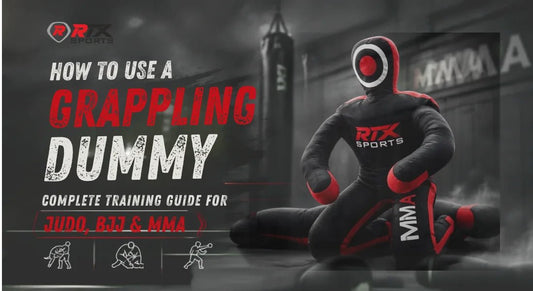
The term grappling dummy anatomy refers to the structure and main sections of a grappling dummy and how they work together during training. Unlike a regular punching bag, an RTX Sports grappling dummy is designed with a human-like shape that helps you practice techniques involving the upper body, lower body, positioning, and transitions between different movements.
The basic body is usually divided into several sections:
-
- Head and neck
- Torso
- Shoulders
- Arms and hands
- Hips and waist
- Legs and feet
- Internal filling
- Outer material
- Seams and reinforced areas
Each section has a specific role. The shape of the arms and legs, for example, makes it possible to practice grips, controls, transitions, and submissions. The torso provides the main body mass, while the joints and flexible areas allow the dummy to be positioned for different drills. Understanding these grappling dummy parts gives you a clearer idea of why certain designs feel different during training.
-
Head and Neck Structure
The head and neck are important parts of the overall dummy structure. They give you a defined area to control when practicing techniques that involve head positioning, neck control, or upper-body transitions.
A properly shaped head can make the feel more natural when you move around it. The neck connects the head to the torso and provides an important transition between these two sections. Depending on the design, the head and neck may have different levels of flexibility. Some dummies are relatively firm in these areas, while others allow more movement. Mastering head and neck positioning is essential for effective upper-body control, transitions, and submission setups during ground grappling.

The head and neck can be useful for practicing:
- Head control and positioning
- Upper-body transitions
- Ground grappling movements
- Certain submission setups
- Positional drills
The exact movement will depend on the dummy's construction and filling, so the head should be viewed as part of the complete structure rather than an isolated component.
-
Torso: The Main Body Structure
The torso is usually the largest section of a grappling dummy. It provides the central mass that connects the head, arms, hips, and legs.
When looking at grappling dummy structure, the torso is one of the most important areas because it influences the dummy's overall weight distribution and stability. A well-constructed torso can maintain its shape while handling repeated pressure during training.
The torso commonly includes:
|
Part |
Main Function |
|
Chest area |
Provides a realistic upper-body surface for control drills |
|
Abdomen |
Supports body positioning and pressure-based techniques |
|
Back |
Helps with transitions and positional practice |
|
Waist |
Connects the torso with the hip and leg sections |
The shape and firmness of the torso can also affect how easily you can move the dummy from one position to another. For someone using a grappling dummy for home training, the torso is especially important because it becomes the central point for many solo drills.
-
Arms and Shoulders
The arms are among the most useful sections when practicing grappling techniques. Their shape gives you something to control, move around, or position during drills. The shoulders connect the arms to the torso. This connection needs to be strong because the arms may be repeatedly pulled, pushed, folded, or repositioned.
The arms can help you practice:
- Arm control
- Grip positioning
- Armbar setups
- Guard-related movements
- Upper-body transitions
- Pinning and control drills
The design of the arms is a major part of the grappling dummy design. Longer or more flexible arms can create different training possibilities compared with shorter or firmer ones. For MMA training, properly shaped arms can also make the dummy useful for practicing transitions between striking positions and grappling positions. This is one reason an MMA grappling dummy is often designed to provide a balance between realistic body shape and durability.
-
Hips and Waist
The hips connect the upper and lower sections of the dummy and play an important role in its overall shape. When practicing grappling movements, the hip area is often used as a reference point for positioning. A well-shaped hip section makes it easier to work around the dummy and practice movements that involve controlling the lower body.
The waist also affects how the dummy bends and folds. A dummy with a clearly defined waist and hip area can provide a more realistic shape for practicing:
- Positional transitions
- Hip control
- Lower-body positioning
- Ground grappling drills
- Movement around the opponent
This part of the grappling dummy construction also affects how the legs connect to the main body.
-
Legs and Feet
The legs are another major component of the dummy. Like the arms, they are shaped to provide a human-like structure that can be positioned during different drills. The legs can be used for practicing movements involving leg control, positioning, transitions, and lower-body techniques. The feet provide the end point of each leg and can make certain positions easier to recreate.
A training dummy with articulated or flexible legs may allow you to move them into different positions. A firmer design may hold its shape more strongly. For Judo practitioners, a Judo training dummy may be designed with a structure that supports throwing and movement drills. A martial arts throwing dummy can also have reinforced sections because repeated throwing places considerable stress on the body and seams.
-
Joints and Flexible Areas
Not every part of a grappling dummy needs to be equally flexible. The areas around the shoulders, hips, elbows, knees, neck, and waist can have different levels of movement depending on the design. These flexible areas allow you to change the dummy's position during training. For example, you may bend an arm while working on an arm control drill or reposition a leg during a lower-body movement. The amount of movement available depends on the internal construction and filling.
This is an important part of understanding grappling dummy features because flexibility can influence how naturally the dummy responds during solo training. A sitting design may also have a different structure from a traditional lying dummy. A sitting martial arts dummy can provide a more upright shape for certain drills and positions.
-
Outer Materials: What Is the Dummy Made From?
The outside material protects the internal filling and gives the dummy its surface. Different manufacturers use different materials depending on the intended use, durability requirements, and design. Common options include:
|
Material |
General Characteristics |
|
Vinyl |
Smooth, easy-to-handle surface and commonly used for training equipment |
|
Canvas |
Durable fabric construction with a traditional training feel |
|
Synthetic materials |
Can provide a balance of durability and flexibility |
A vinyl martial arts dummy may have a smooth exterior that is easy to handle and maintain. On the other hand, a canvas martial arts dummy uses a fabric-based outer surface that can provide a different feel during training. The choice of material is an important part of grappling dummy materials because the outer shell needs to withstand repeated handling, movement, and impact.
-
Internal Filling and Weight Distribution
What you see on the outside is only part of the dummy. The material inside also plays a major role in how it feels during training. The filling gives the dummy its weight and firmness. It also affects how easily you can lift, drag, reposition, or control it. Different filling densities can create different levels of firmness. A lighter filling may make the dummy easier to move, while a denser construction can create a heavier training experience.
The filling needs to work together with the outer shell and internal construction. If these components are not balanced properly, the dummy may not hold its intended shape. This is why grappling dummy construction involves more than simply creating a human-shaped outer cover. The internal structure, filling, stitching, and body proportions all contribute to the final product.
-
Seams and Reinforced Construction
Seams may not be the first thing you notice when looking at a training dummy, but they are critical to its durability. The seams connect different sections of the outer material. Areas around the shoulders, arms, legs, hips, and torso can experience repeated stress during training. A quality design may use reinforced stitching in areas that receive more pressure.
Important construction areas can include:
- Shoulder connections
- Arm seams
- Hip connections
- Leg seams
- Neck area
- Main torso seams
Strong seams help the dummy maintain its shape during repeated use. This becomes particularly important for an adult grappling dummy, which may be heavier and exposed to greater training loads.
How All the Parts Work Together
The most important thing to understand about a grappling dummy is that its components are not working independently. The head connects to the neck. The neck connects to the torso. The shoulders connect the arms to the torso, while the hips connect the torso to the legs. Inside, the filling supports the outer material and gives the entire body its weight.
Together, these components create the complete training shape.
For example, when you move an arm, the shoulder connection needs to handle that movement. When you reposition a leg, the hip section needs to provide enough flexibility and support. When you lift the dummy, the torso and internal filling determine how the weight is distributed. This relationship between the different parts of a grappling dummy is what makes the overall design useful for solo practice.
Different Dummy Structures for Different Training Needs
Not every grappling dummy has the same design. The structure can vary depending on the type of training it is intended to support. A traditional ground-focused dummy may emphasize flexible arms and legs for grappling drills. A standing model may have a more upright structure, while a throwing-focused model may prioritize reinforced construction.
Some designs are also made specifically for younger athletes. A children's grappling dummy can have smaller proportions and a lighter overall structure compared with an adult model. Similarly, a 180 cm martial arts dummy provides a larger human-like profile for athletes who prefer a full-size training partner. The important point is that size and structure should match the type of training you want to perform.
Why Understanding Dummy Structure Matters
Knowing how your dummy is built can help you understand what it is designed to do. Instead of treating the dummy as simply a heavy object, you can look at each section and understand its purpose. This can make your training more intentional and help you choose drills that suit the dummy's structure.
For example:
- Use the arms for control and upper-body drills.
- Use the torso for positional and pressure-based movements.
- Use the hips as a reference point during transitions.
- Use the legs for lower-body positioning and control.
- Pay attention to flexible joints when changing positions.
- Consider the outer material when handling and storing the equipment.
For a dummy for MMA drills, the relationship between the upper and lower body can be particularly useful because MMA training can involve frequent transitions between different positions.
Choosing a Dummy Based on Its Construction
Once you understand the anatomy, choosing a suitable training dummy becomes easier. Instead of looking only at appearance, consider how the different components are constructed and whether they match your training needs.
Look at:
- Overall body proportions
- Arm and leg design
- Flexibility of the joints
- Torso construction
- Outer material
- Internal filling
- Stitching and reinforced seams
- Overall size and weight
If you mainly practice solo grappling at home, a design intended for a grappling dummy for solo training can give you a useful setup for repeated drilling. If your training involves different combat sports, you may prefer a versatile design that can handle various movements and positions.
For athletes interested in purchasing equipment, you can also explore an RTX Sports grappling dummy and compare its construction with the type of training you regularly perform.
Final Look at Grappling Dummy Anatomy
A grappling dummy is made up of many connected components, and each one contributes to the way the equipment feels and performs. From the head and torso to the arms, legs, joints, filling, outer material, and reinforced seams, every section has a practical function. Understanding these details gives you a better picture of the grappling dummy structure and helps you understand why different models can feel so different during training.
Whether you need equipment for BJJ, MMA, Judo, wrestling, or general martial arts practice, look beyond the appearance of the dummy. Pay attention to its construction, materials, proportions, flexibility, and overall design. A well-designed training dummy is more than a human-shaped bag. It is a piece of training equipment built around the movements you want to practice. Once you’ve chosen the right dummy, following a grappling dummy care guide can also help you keep it in good condition and extend its lifespan.
Conclusion
Understanding the anatomy of a grappling dummy can change the way you look at your training equipment. The head, torso, arms, legs, joints, filling, materials, and seams all have a role to play in creating a useful training partner.
When you know what each section does, you can better understand which drills the dummy is suited for and how its construction affects your training experience. If you are ready to add a reliable training partner to your solo sessions, you can explore an RTX Sports grappling dummy and choose a design that fits your training style and requirements.
FAQs
1. What are the main parts of a grappling dummy?
The main parts usually include the head, neck, torso, shoulders, arms, hands, waist, hips, legs, feet, outer material, internal filling, and reinforced seams.
2. What materials are used to make grappling dummies?
Common materials include vinyl, canvas, and other synthetic materials. The choice depends on the intended design, durability, flexibility, and training use.
3. Why is the filling important in a grappling dummy?
The filling determines much of the dummy's weight, firmness, and overall feel. It also affects how easily the dummy can be moved and repositioned during training.
4. Are all grappling dummies built the same way?
No. Different models can vary in size, proportions, flexibility, materials, filling, and reinforcement depending on their intended use.
5. What is the difference between a standing and ground grappling dummy?
A standing model is generally designed to maintain a more upright position, while a ground-focused dummy is structured around drills performed on the floor. The best structure depends on the movements you want to practice.
6. Can a grappling dummy be used for different martial arts?
Yes. Depending on its construction, a dummy can be used for BJJ, MMA, Judo, wrestling, and other martial arts drills. However, the exact suitability depends on the dummy's design and intended use.
Tags: