
Standing vs Sitting Grappling Dummy: Which One Should You Buy?
If you want to sharpen your grappling skills at home, choosing the right dummy can make a bigger difference than you might expect.
A grappling dummy gives you a practical way to drill takedowns, throws, submissions, transitions, and ground techniques without needing a training partner. But when you start shopping, you’ll quickly notice two main options: standing grappling dummies and sitting grappling dummies. Each is designed for a different style of training, so the better choice depends on what you actually want to practice.
In this guide, you’ll compare standing vs. sitting grappling dummies, discover the strengths and limitations of each, and learn which option makes the most sense for your training goals in Germany.
Standing vs Sitting Grappling Dummy
The easiest way to choose between the two is to think about where most of your training begins. If you regularly practice MMA takedowns, wrestling shots, judo throws, clinch entries, or stand-up grappling, a standing dummy is usually the better fit. Its upright position gives you a more realistic target for techniques that start on the feet. For options designed specifically for MMA, BJJ, and Judo training, RTX Sports also offers a range of standing and sitting grappling dummies.
If most of your training involves BJJ, submission grappling, guard passing, mount escapes, armbars, triangles, or other ground techniques, a sitting dummy is generally more practical. It is designed for grounded positions, takes up less room, and is easier to store after training.
|
Feature |
Standing Grappling Dummy |
Sitting Grappling Dummy |
|---|---|---|
|
Takedowns |
Excellent |
Limited |
|
Throws |
Excellent |
Not suitable |
|
Clinch drills |
Excellent |
Limited |
|
Ground grappling |
Good |
Excellent |
|
Guard work |
Limited |
Excellent |
|
Submission practice |
Good |
Excellent |
|
Striking drills |
Better |
Limited |
|
Storage |
Requires more space |
Easy to store |
|
Typical cost |
Often higher |
Often lower |
|
Best for |
MMA, judo, wrestling |
BJJ and submission grappling |
No single grappling dummy fits every athlete. The right choice depends on the techniques you want to repeat most often.
What Is a Standing Grappling Dummy?
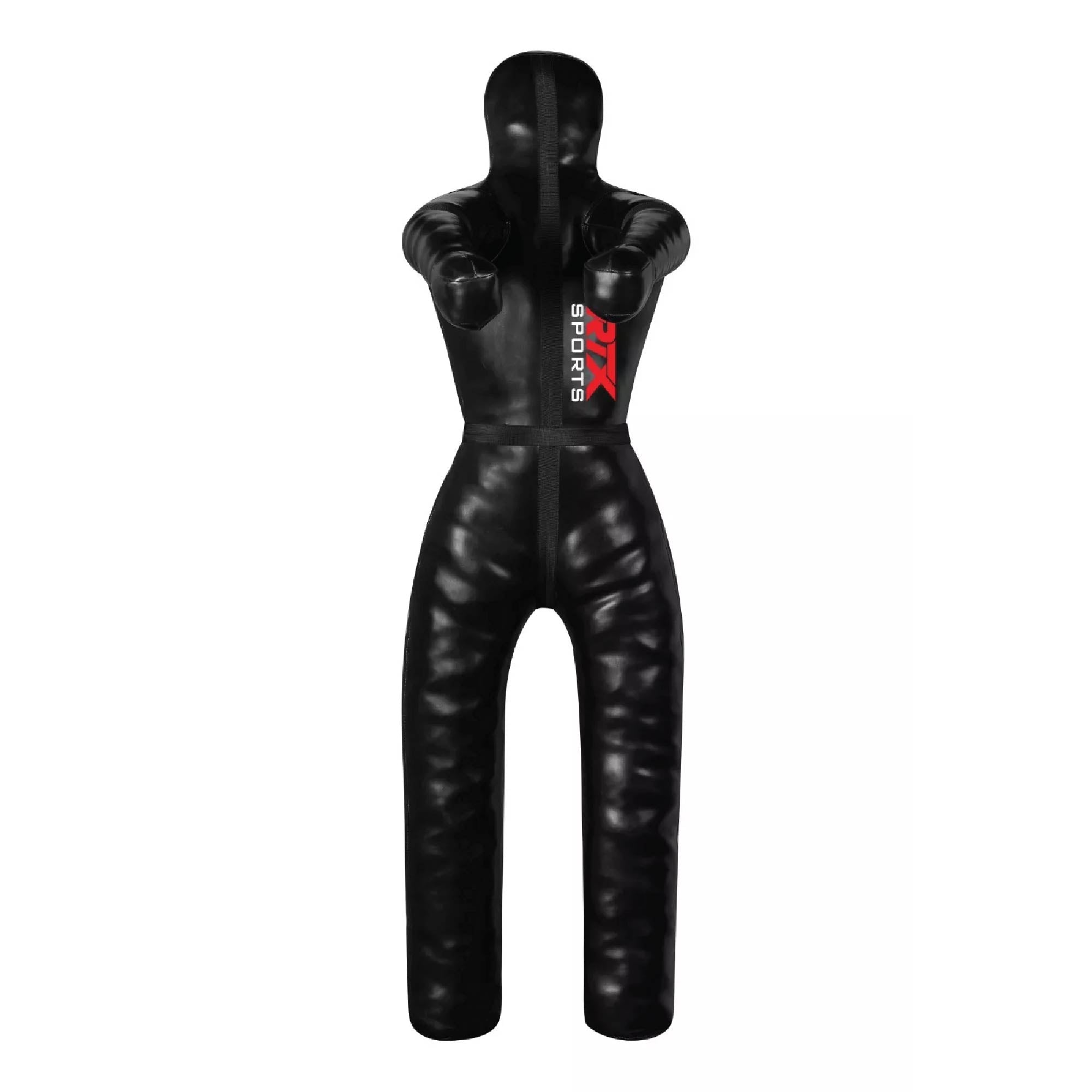
A standing dummy represents an opponent in an upright position. Depending on the model, it may have a complete body with legs and articulated limbs, or it may use a sturdy base to keep the training partner standing. The main benefit is simple: you can practice techniques that start with both you and your imaginary opponent standing. This includes takedown entries, wrestling shots, clinch positions, throws, and certain striking drills.
For athletes involved in wrestling, judo, or MMA, that upright position can make home training considerably more useful. A standing wrestling dummy, for example, gives you a target for practicing shots and transitions, while a judo throwing dummy is better suited to repeating the movement patterns involved in throws.
What Can You Practice With a Standing Grappling Dummy?
A standing grappling dummy is great for practicing punches, kicks, takedowns, throws, clinch work, and submissions. It helps you improve your technique, build muscle memory, and get more comfortable with your movements.

1. Takedowns and Wrestling Shots
One of the biggest reasons to buy a standing dummy is to practice takedowns repeatedly. You can work through single-leg and double-leg entries, level changes, penetration steps, grip placement, and finishing movements. Instead of stopping after a few repetitions because your training partner needs a break, you can reset the dummy and repeat the movement.
This makes a standing model particularly useful if takedowns are an important part of your game. For someone working on a takedown in MMA, for example, the dummy can help reinforce the movement from the initial stance through the entry and finish. It is important to remember that a grappling dummy cannot react, sprawl, move away, or change its balance like a real opponent. It is therefore best used for drilling mechanics and repetition rather than trying to reproduce every part of live wrestling.
2. Judo Throws
A standing dummy can also be useful for judo-based training. A judo throwing dummy gives you an upright body to work around as you rehearse grips, positioning, rotation, and throwing mechanics.
You will not get the same reaction or resistance you would experience with a live judoka. Still, repeating the movement can help you become more familiar with the sequence and body positioning involved in your technique. If throws are one of your main reasons for buying a dummy, a standing design makes much more sense than a permanently seated model.
3. Clinch Work
Standing dummies are also useful for practicing clinch positions. You can work on controlling the upper body, positioning your arms around the torso, establishing neck control, and moving between different grips. This can be especially helpful for MMA athletes because clinch work often connects directly to takedowns and ground grappling. A sitting dummy cannot give you the same starting position. If your training frequently moves from standing clinch control into takedowns, the upright shape is a significant advantage.
4. Striking and Stand-Up Drills
Some standing dummies can also be used for controlled striking drills. The upright head and torso give you a target at a more realistic height than a grounded dummy.
Depending on the construction, you may be able to practice punches, elbows, knees, or other stand-up combinations. However, you should always check the manufacturer's instructions before striking a particular model. Grappling training equipment designed primarily for throws and submissions may not be built to handle repeated heavy impact.
Pros and Cons of Standing Grappling Dummies
Standing grappling dummies are useful for practicing takedowns, throws, clinch work, and striking combinations. A judo grappling dummy can be especially useful for athletes focusing on throws and grip-based techniques. Their upright design allows more realistic movement and positioning, but they can be larger, heavier, and more expensive than traditional grappling dummies.
Advantages of a Standing Dummy
- Better for takedowns: You can practice single-leg and double-leg entries, wrestling shots, throws, and standing transitions from a more appropriate position.
- Useful for MMA: An upright training partner allows you to combine clinch work, takedown drills, and suitable stand-up techniques in the same training session.
- More realistic starting position: If your training normally begins on the feet, an upright target makes it easier to rehearse the positioning and movement you use against a standing opponent.
- Greater training versatility: Depending on the design, a full-body model can be used for standing drills and then incorporated into some ground transitions.
Disadvantages of a Standing Dummy
- Requires more storage space: A full-size dummy can be hard to store in a small bedroom, apartment, or home gym, especially if it needs to stay upright.
- Often costs more: A taller, more substantial dummy requires more material, and models designed to remain standing may also require a heavy base.
- Can be difficult to move: Grappling training equipment can feel useful during training, but carrying and repositioning it can become inconvenient.
- Some models require a weighted base: Freestanding designs may rely on water- or sand-filled bases for stability. This can add weight and complicate storage.
What Is a Sitting Grappling Dummy?
A sitting grappling dummy is designed specifically around ground-based training. Instead of standing upright, it usually remains in a seated, kneeling, curled, or partially grounded position. This design is particularly popular among BJJ and submission grappling athletes because it puts the grappling gear into positions that are already relevant to ground training.
A jiu jitsu dummy can therefore be a practical choice if your main goal is to repeat ground techniques rather than work on standing entries. For home users, there is another obvious advantage: a sitting dummy generally needs much less space. You can finish your training session, move it to a corner, and reclaim the training area.
What Can You Practice With a Sitting Grappling Dummy?
A ground fighting dummy is a versatile training tool for practicing techniques such as guard passing, submissions, sweeps, transitions, and ground-and-pound movements. Its seated position makes it especially useful for developing control, positioning, and attacks from various grappling situations.
1. Guard Passing
A sitting model can be useful for repeatedly practicing guard-passing movements. You can work around the legs and torso while focusing on your hand placement, posture, pressure, and movement. Because the training partner remains in the same position, you can repeat the same sequence without needing to reset a partner. A BJJ training dummy is particularly useful for this kind of repetition when you already know the technique and want to improve your movement pattern.
2. Ground Control and Transitions
Grounded dummies are also suited to positional drills. You can practice moving between positions, work through side-control and mount transitions, and rehearse basic escape sequences. The dummy will not resist or suddenly change position, but that can actually be helpful when you are learning the order of movements.
Once you understand the technique, live training is still necessary to develop timing, pressure, reactions, and adaptation. The grappling training equipment's main role is to give you a consistent target for repetition.
3. Submission Drills
Submission practice is another major strength of a sitting dummy. Depending on the design and limb structure, you can repeatedly drill armbars, triangles, chokes, and other submission movements. A model with full-length arms and legs generally gives you more options than one with simplified limbs. For someone looking specifically for a BJJ grappling dummy, the shape and limb design should therefore be considered just as carefully as the price.
Pros and Cons of Sitting Grappling Dummies
Sitting grappling dummies are a practical choice for ground-focused training, especially for BJJ and submission grappling. A seated grappling dummy is easy to store and useful for practicing submissions, guard work, and positional transitions, but it is less suitable for takedowns, throws, and standing techniques. Before choosing one, it’s worth weighing these advantages and limitations against your training goals to make sure it fits your routine.
Advantages of a Sitting Dummy
- Excellent for ground grappling: The grounded shape naturally suits BJJ, submission grappling, guard work, and positional drills.
- Easy to store: A sitting dummy can usually be moved into a corner or placed on a mat or chair after training, making it convenient for home use.
- Requires less space: You do not need the same amount of floor area required by a full upright model and its base.
- Often more affordable: Sitting models generally use less material and do not necessarily require the heavy base found on some standing designs.
Disadvantages of a Sitting Dummy
- Not suitable for standing takedowns: You cannot properly reproduce the entry, level change, or finishing mechanics of a takedown against an upright target.
- Limited clinch training: A permanently grounded dummy cannot replace a standing opponent when you want to practice upright clinch positions.
- Limited striking practice: You lose the realistic head-height and standing torso position that make some stand-up drills possible with a standing dummy.
Standing vs Sitting: Which Is Better for BJJ?
If BJJ is your main focus, a sitting dummy will often be the more practical choice, especially when most of your home training happens on the ground. Its grounded position gives you a consistent target for guard passing, positional transitions, escapes, and submissions, while also being easier to store when your training area has another purpose.
A Sitting grappling dummy BJJ athletes use for ground training can be especially useful for repeated drilling. A BJJ grappling dummy with full arms and legs gives you more options for practicing armbars, triangles, and other submissions without needing a partner to reset after every attempt. However, BJJ also includes takedowns and standing exchanges, so a standing grappling dummy BJJ practitioners can use for upright drills may be the better choice if you want to develop that part of your game.
|
Sitting Grappling Dummy |
Standing Grappling Dummy |
|
Best for guard passing, ground control, positional transitions, and escapes. |
Better for takedowns and standing BJJ exchanges. |
|
Excellent for armbars, triangles, and other submission drills. |
Useful for practicing standing entries and wrestling-style takedowns. |
|
Easier to store and practical for home-based training. |
Requires more space but offers greater versatility for upright drills. |
|
Best when your BJJ training focuses mainly on ground positions and submissions. |
Better when you want to develop both your standing game and ground transitions. |
Standing vs Sitting: Which Is Better for MMA?
For MMA, a standing dummy generally has the advantage because MMA combines standing and ground phases. A typical sequence can begin with both athletes standing, move into a clinch, develop into an MMA takedown, and finish with ground control or a submission. A standing model allows you to practice more of this sequence from its natural starting position.
An MMA grappling dummy can be particularly useful for athletes who want to combine wrestling-style entries with grappling transitions. You can work on your level change, entry, body positioning, control, and movement without needing a partner for every repetition. The upright shape also makes it useful for clinch drills before moving into a takedown sequence. A sitting dummy still has value for MMA if your gym already gives you plenty of takedown and clinch practice. In that situation, a grounded model can help you focus on submissions, ground control, and positional transitions during your home sessions.
|
Sitting Grappling Dummy |
Standing Grappling Dummy |
|
Best for ground control, submissions, and positional transitions. |
Better for clinch work, standing entries, and MMA takedowns. |
|
Useful for repeatedly drilling the ground phase of MMA. |
Allows you to practice standing-to-ground sequences. |
|
Takes less space and is easier to store at home. |
Requires more space because of its upright design. |
|
Better when your home training mainly focuses on ground grappling. |
Better for all-around MMA training involving both standing and ground phases. |
Standing vs Sitting for Judo and Wrestling
For judo and wrestling, the standing option is usually the more logical choice because both disciplines place considerable emphasis on upright movement. A standing model gives wrestlers a target for practicing shots, body positioning, grip transitions, and finishing mechanics, making it more suitable for repetitive standing drills.
If you are looking for a wrestling dummy filled with enough material to feel substantial, consider its actual weight, construction, and weight distribution rather than simply choosing the heaviest option. The training tool should be heavy enough to provide a useful training target while still being practical to move and handle.
Judo practitioners should similarly choose a training partner based on the movements they want to practice. A judo throwing dummy can be more useful for repetitive throw drills than a seated model because its upright position better matches the starting position of the technique. A sitting dummy can still help with ground work, but it cannot replace an upright model when your primary goal is improving throws or takedowns.
|
Sitting Grappling Dummy |
Standing Grappling Dummy |
|
Mainly useful for ground grappling after a takedown or throw. |
Best for wrestling shots, takedown entries, and finishing mechanics. |
|
Can help with ground control and submission practice. |
Suitable for practicing judo throws, grips, and upright entries. |
|
Easier to store and more convenient for smaller training spaces. |
Provides a more realistic upright target for standing techniques. |
|
Better as a secondary ground-training option for judo or wrestling. |
Better as the primary choice when throws and takedowns are your main focus. |
Which Grappling Dummy Should You Buy?
Choosing the right grappling dummy depends on your training style, goals, available space, and budget. Whether you focus on BJJ, MMA, wrestling, or judo, understanding the differences between standing and sitting dummies can help you find a model that suits your training and lets you practice techniques more effectively at home.
Choose a Standing Grappling Dummy If:
- You train MMA regularly: An upright training tool lets you work on clinch positions, takedown entries, and other standing-to-ground movements.
- You practice wrestling: A standing model provides a better target for shots, grips, and takedown finishes.
- You train judo: A standing or throwing-focused dummy is more appropriate for rehearsing throw mechanics.
- You want stand-up drills: The upright head and torso give you more options for suitable striking and clinch practice.
- You have enough space: Standing models are much easier to use when you have a dedicated training area where the training partner can remain upright.
Choose a Sitting Grappling Dummy If:
- You mainly train BJJ: A grounded dummy is well suited to the positions and techniques that make up most of your home drilling.
- You focus on submissions: The seated position makes repetitive ground submission practice convenient.
- You need easy storage: A sitting model is a better choice when your training area is also your living space.
- You mainly practice guard work: The grounded shape gives you a consistent target for guard passing and positional drills.
- You want a simpler home setup: You can avoid the larger footprint and heavy base that some standing models require.
What Should You Look for Before Buying?
Once you have decided between a standing and sitting grappling dummy, do not choose based on appearance or price alone. The material, filling, weight, and limb design all affect how useful the training tool will be during regular training. A well-built model should feel stable during drills, handle repeated gripping and pulling, and remain practical to move and store at home. If you are considering an RTX Sports standing dummy, make sure its construction suits the techniques you plan to practice and meets the needs of German martial arts practitioners training at home. The following features are particularly important when comparing different grappling dummy options:
1. Material and Durability
The outer material is one of the first things to check. Heavy-duty synthetic leather, vinyl, and durable canvas are common choices because they can withstand repeated training better than lightweight fabrics. Also look closely at the stitching and seams, especially around the shoulders, hips, and limbs, where pulling and twisting can create extra stress. If you are considering an RTX Sports standing dummy, make sure its construction suits the techniques you plan to practice.
2. Weight and Filling
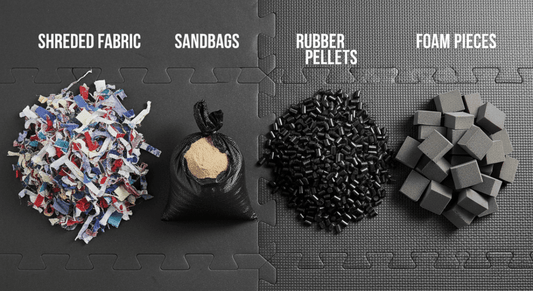
The filling determines how the dummy feels when you grab, lift, or move it. Cotton- or rag-filled dummies can provide a more body-like feel and generally keep their shape well when packed correctly. Bean-style filling may shift too much during repeated drills, making the training partner feel less consistent.
Weight matters, too. A heavier grappling dummy can provide a more substantial training target, but it should not be so heavy that moving or storing it becomes difficult. When comparing an RTX Sports sitting dummy, consider both its listed weight and how evenly that weight is distributed throughout the body.
3. Arms and Legs
Full, properly attached limbs are worth prioritizing if you want to practice joint locks, armbars, leg sweeps, and other techniques involving the arms or legs. A dummy with realistic limb placement gives you more positions to work with and can make your drilling more versatile. Check that the limbs are securely stitched and designed for repeated manipulation.
Conclusion
Choosing the Best grappling dummy really comes down to how you train and what you want to improve. If your focus is mainly on BJJ, submissions, guard passing, and ground transitions, a sitting training dummy can be a practical and convenient choice for home practice. On the other hand, if you train MMA, wrestling, or judo and want to work on takedowns, throws, clinch positions, and standing-to-ground transitions, a standing training dummy will give you more useful options.
Before making your final decision, think about your training goals, available space, budget, and the dummy’s overall construction. Pay attention to its weight, filling, materials, stitching, and limb design, as these details can make a big difference during repeated grappling dummy exercises. At the end of the day, the best dummy is not necessarily the biggest or most expensive one; it is the one that fits naturally into your training routine and helps you consistently practice the techniques you want to master.
FAQs
1. What is the main difference between a standing and sitting grappling dummy?
The main difference is the position they replicate. A standing grappling dummy is designed for upright techniques such as takedowns, throws, clinch work, and wrestling entries, while a sitting dummy is mainly suited to guard passing, positional control, escapes, and submissions.
2. Is a standing or sitting grappling dummy better for BJJ?
For BJJ athletes who mainly practice ground techniques at home, a sitting grappling dummy is usually more practical. It works well for submissions, guard passing, transitions, and positional drills. However, a standing dummy offers more versatility if you also want to practice takedowns and standing exchanges.
3. Is a standing grappling dummy good for MMA training?
Yes. A standing dummy is useful for practicing clinch positions, takedown entries, wrestling movements, and standing-to-ground transitions. It can complement partner training by providing a consistent target for repetition.
4. Can you practice takedowns with a sitting grappling dummy?
Not effectively. A sitting dummy does not provide the upright position needed for level changes, penetration steps, clinch entries, or takedown finishes. If takedowns are important to your training, a standing dummy is the better choice.
5. Can a standing grappling dummy be used for ground training?
Many standing dummies can also be incorporated into ground drills, depending on their construction and flexibility. However, a dedicated sitting dummy is generally more convenient if most of your training takes place on the mat.
6. What type of grappling dummy is best for wrestling?
A standing grappling dummy is generally the better choice for wrestling. Its upright position allows you to work on shots, level changes, body positioning, grips, and takedown finishes.
7. What type of grappling dummy is best for judo?
A standing or throwing-focused grappling dummy is usually more suitable for judo because many techniques begin from an upright position. It can help with practicing grips, positioning, rotation, and throwing movements.
8. How heavy should a grappling dummy be?
There is no single ideal weight. The best weight depends on your body size, training style, the techniques you plan to practice, and how much space you have at home.
9. What should I look for when buying a grappling dummy?
Pay attention to the dummy's material, stitching, filling, weight, limb design, and overall construction. Also consider whether it is designed for standing or ground training, along with its size, storage requirements, and price.
10. Can grappling dummies replace training with a real partner?
No. A dummy is excellent for repetition, but it cannot react, resist, change position, or apply pressure like a real training partner. Regular partner training is still important for developing timing, balance, reactions, and adaptability.
Tags:
Related articles



Difference between Muay Thai and MMA
Aug 16 2025