
What is grappling? The ultimate guide for beginners and professionals.
How does grappling help smaller people control stronger opponents?
If you're new to combat sports or looking to improve your skills, you've probably come across the term grappling. Unlike striking-based martial arts that focus on punches and kicks, grappling is all about controlling, taking down, pinning, and submitting an opponent using technique, leverage, and body positioning. From self-defense and mixed martial arts (MMA) to fitness and competitive tournaments, grappling has become one of the fastest-growing disciplines worldwide.
In this complete beginner-to-professional guide, you'll learn what grappling is, how it works, its history, major styles, essential techniques, competition rules, training benefits, and expert tips for choosing the right discipline. Whether you're preparing for your first class, competing in grappling MMA, or searching for grappling Deutsch resources, this guide provides the practical knowledge to help you progress with confidence.
What Is Grappling?
If you've ever watched a mixed martial arts (MMA) fight, you've probably seen this happen: two fighters clinch, one takes the other down, and moments later the match ends with a tap-out. There are no punches or kicks involved at that moment, just technique, control, and precision. That's grappling in its purest form.
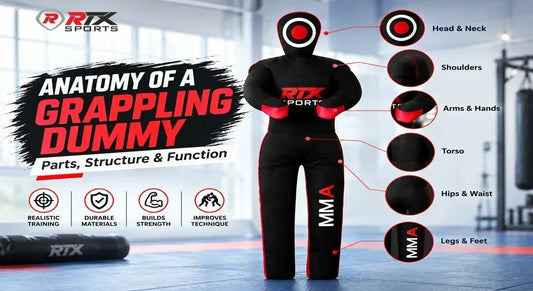
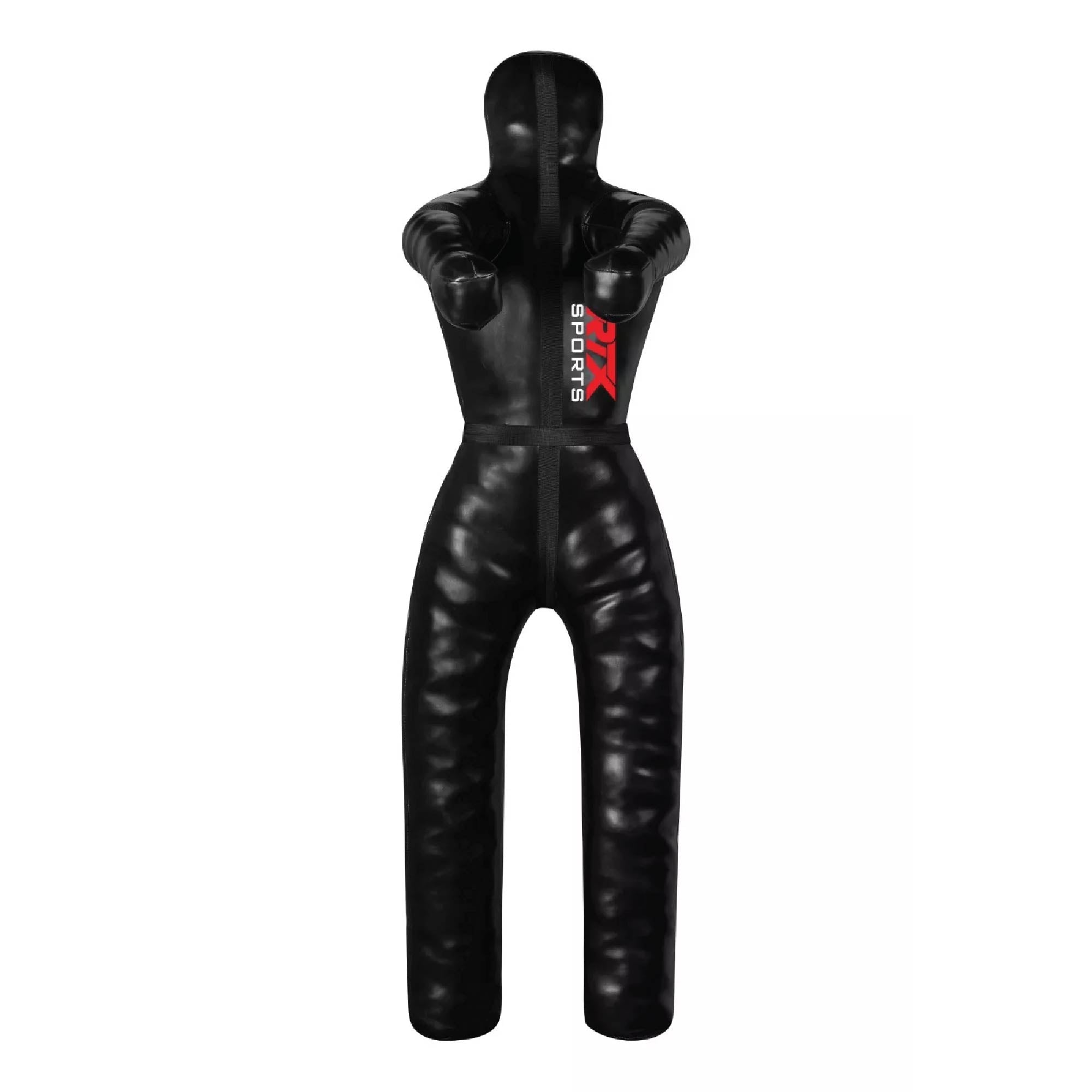
Grappling is a discipline practiced across many combat sports and martial arts that focuses on controlling an opponent through physical contact rather than striking (punching or kicking). The goal is to take an opponent down, gain positional control on the ground, and ultimately force a submission using joint locks or chokes. Training with an RTX grappling dummy helps practitioners refine these techniques safely. Instead of relying on size or brute strength, grappling emphasizes leverage, body positioning, balance, timing, and technical skill to gain the upper hand.
The History of Grappling: Origins, Evolution, and Modern Brazilian Jiu-Jitsu
Grappling is one of the oldest forms of combat sports, focusing on techniques such as throws, takedowns, holds, and ground fighting. Its history spans thousands of years and can be traced across different civilizations.
Ancient Origins of Wrestling and Grappling
Historical records show that wrestling became an Olympic discipline in ancient Greece around 708 BC. The Romans later adopted Greek wrestling traditions and developed their own grappling methods, helping spread these combat techniques throughout their empire.
Traditional Grappling Styles Around the World
Different cultures developed unique forms of grappling. In India, Kushti evolved as a traditional wrestling style that remains practiced today. Japan introduced influential martial arts such as Judo and Jiu-Jitsu, while Russia developed Sambo, blending wrestling with other combat techniques.

The Rise of Brazilian Jiu-Jitsu (BJJ)
A major milestone in grappling history occurred in the early 20th century when Japanese Judo master Mitsuyo Maeda traveled to Brazil. His teachings influenced the Gracie family, who adapted these techniques and created Brazilian Jiu-Jitsu (BJJ), which later became one of the world’s most popular grappling disciplines.
Grappling Today: A Global Combat Sport
Today, grappling is practiced worldwide through various styles, competitions, and martial arts communities. According to the International Brazilian Jiu-Jitsu Federation (IBJJF), more than 250,000 athletes participate in official BJJ tournaments globally each year.
Basic principles of this martial art
MMA grappling and BJJ grappling are built around control, technique, and strategic movement. The key principles include:
-
Position control: Staying in a strong position helps fighters keep control of their opponents, protect themselves from attacks, and create chances to finish the fight with submissions.
-
Takedowns: Techniques like the double-leg takedown and hip throw help transition the fight from standing to the ground, where grappling skills become more effective.
-
Submissions: Using technique and leverage, fighters can apply moves like armbars and chokeholds, including the rear naked choke, to put pressure on their opponents and secure a submission.
-
Position transitions: The ability to move from defense to offense quickly is essential for gaining an advantage in MMA grappling and Brazilian Jiu-Jitsu (BJJ) grappling.
Studies by the Association of Boxing Commissions indicate that more than 60% of MMA fights are decided on the ground, highlighting the importance of grappling techniques in competitive combat sports.
Disciplines and styles in grappling
Grappling is an umbrella term for various disciplines:
-
Brazilian Jiu-Jitsu (BJJ): Focus on ground fighting, submission, and guard play. Training is done with a gi or in the no-gi variation.
-
Judo: Focus on throws and ground control, fewer submissions than in BJJ.
-
Sambo: Russian style with strong leg raises and throwing techniques.
-
Catch Wrestling: Western style with aggressive submissions and control games.
-
Olympic wrestling: Greco-Roman (upper body holds only) and freestyle wrestling (leg attacks allowed).
Interesting fact: Wrestling is one of the oldest sports in the world and was already represented at the first modern Olympic Games in 1896.
Important Grappling Techniques
Grappling involves a mix of standing attacks, ground control, and submission techniques used in martial arts and combat sports. Understanding the key techniques can help beginners build a strong foundation.
Standing Grappling Techniques
-
Double-Leg Takedown: A powerful takedown where a fighter targets both legs to bring an opponent to the ground.
-
Single-Leg Throw: A technique focused on controlling and taking down an opponent by attacking one leg.
-
Hip Throw (O-Goshi): A classic judo-inspired throw that uses hip movement and leverage to lift and throw an opponent.
-
Clinch Control: The ability to control an opponent at close range using grips, positioning, and pressure.
Ground Grappling Positions
-
Guard: A defensive position where a fighter uses their legs to control an opponent from the bottom.
-
Half-Guard: A position where one of the opponent’s legs is trapped, creating opportunities for sweeps and attacks.
-
Side Control: A dominant position where a fighter controls an opponent from the side while looking for transitions or submissions.
-
Mount Position: A strong top position that allows control and creates opportunities for strikes or submissions.
-
Back Control: A highly effective position where a fighter controls an opponent from behind and can attempt finishing techniques.
Essential Submission Techniques
-
Armbar: A joint lock that targets the opponent’s elbow by applying controlled pressure.
-
Triangle Choke: A chokehold that uses the legs to restrict blood flow and force a submission.
-
Rear-Naked Choke: A finishing technique performed from back control, often considered one of the most effective submissions.
-
Kimura: A shoulder lock that uses rotational pressure to control and submit an opponent.
-
Guillotine Choke: A choke applied from the front by trapping the opponent’s neck.
Grappling Submission Statistics
According to Fight Metric data, approximately 45% of victories in submission-only tournaments end through either an armbar or a rear-naked choke, highlighting the effectiveness of these techniques in competitive grappling.
Rules in grappling competition
The rules of a grappling competition vary depending on the governing organization, but most grappling sports follow a similar scoring and safety system. Competitors can win by submission or by earning points through positional control and technical progress.
Typical grappling competition rules include:
-
Points are awarded for positional advances, such as guard passes, mount, and back control.
-
Victory by submission or by having the highest score when time expires.
-
No punches or kicks are allowed in a grappling sport (except in MMA competitions).
-
Dangerous techniques, including eye-gouging, spinal manipulation, and other illegal moves, are prohibited to protect athlete safety.
Understanding these rules helps athletes prepare for grappling competitions and compete effectively under different rule sets.
Wrestling in Mixed Martial Arts
MMA Grappling is often the deciding factor in mixed martial arts, allowing fighters to control opponents, secure takedowns, and finish fights with submissions. Legendary fighter Khabib Nurmagomedov built his undefeated career through exceptional wrestling and ground control.
Fact: Khabib retired with a perfect 29-0 record, with the majority of his victories coming through grappling dominance rather than striking. Whether training for MMA or joining the growing Grappling Deutschland community, developing strong grappling skills is essential for success in modern combat sports.
Training and equipment for grapplers
A typical training session includes warm-up, technique, drills, situational sparring, and free rolls.
Equipment:
-
Gi or rashguard and shorts
-
face mask
-
Knee pads or elbow pads
-
Grappling dummy for solo exercises
Statistics: A one-hour grappling session burns between 500 and 800 calories, depending on the intensity, making it an effective full-body workout.
Benefits of grappling training
Training in grappling offers physical, mental, and practical benefits for athletes of all skill levels. Whether your focus is MMA, BJJ, or general fitness, practicing with an MMA grappling dummy can help improve technique, control, and overall performance while building well-rounded skills.
-
Fitness: A full-body workout that improves strength, endurance, and burns calories.
-
Self-defense: Learn to control and neutralize an opponent without relying on strikes.
-
Mental strength: Develop patience, strategy, discipline, and adaptability under pressure.
-
Community: Train in a respectful environment that promotes teamwork, sportsmanship, and continuous improvement.
Grappling in numbers
Fascinating statistics and facts about grappling:
-
60 percent of all MMA fights are decided by grappling techniques.
-
45 percent of submission victories in submission-only tournaments are achieved through armbar or rear-naked choke.
-
Over 250,000 athletes participate in official BJJ tournaments annually.
-
Intense grappling sessions burn 500 to 800 calories per hour.
-
Wrestling has been part of the modern Olympic Games since 1896.
-
Average fight time in professional grappling matches: 5 to 10 minutes.
-
Participation in No-Gi tournaments has increased by over 40 percent in the last five years.
-
The longest documented grappling match in modern sport, where the sole objective was submission, was Duarte's 90 minutes.
Fun fact: Khabib Nurmagomedov has never lost by submission in his entire career.
Common misconceptions about grappling
-
In grappling, it's not just about strength; technique often determines victory.
-
Wrestling is a form of grappling. Grappling is the umbrella term encompassing other disciplines.
-
In MMA, grappling is used to neutralize blows, as it combines both striking and grappling, unlike pure striking disciplines.
FAQs about Grappling
Is grappling good for self-defense?
Yes. Grappling allows you to control or neutralize an opponent without causing serious injury.
What is the difference between grappling and wrestling?
Wrestling focuses on takedowns and ground control, while grappling includes additional submissions and international styles.
Do I need strength, um, to be successful in grappling?
Technique, timing, and endurance are more important than raw muscle power.
How long does it take to learn grappling?
The basics can be learned in a few months, but reaching a high level requires years of intensive training.
What is No-Gi Grappling?
A form of grappling without a traditional suit, practiced in shorts and a rashguard, is usually faster and more dynamic than Gi grappling.
Conclusion: Why everyone should try grappling
Grappling is more than just ground fighting; it's a proven martial art, a competitive sport, and an effective self-defense system. Regular training improves strength, endurance, technique, confidence, and mental resilience while teaching you how to control an opponent through skill rather than force.
Whether your goal is fitness, MMA, Brazilian Jiu-Jitsu (BJJ), or competition, grappling offers long-term benefits for practitioners of all levels. To accelerate your progress, consistent practice is key. Training tools such as RTX grappling dummies from RTX Sports can help you refine techniques, improve muscle memory, and practice safely between classes, making them a valuable addition to any grappler's training routine.
Tags:
Previous
How to Use a Grappling Dummy: Complete Training Guide for Judo, BJJ & MMA
Next
Are Grappling Dummies Worth It in 2026? Pros, Cons & Buying Guide