
How to Use Lifting Straps to Lift Heavier and Protect Your Grip
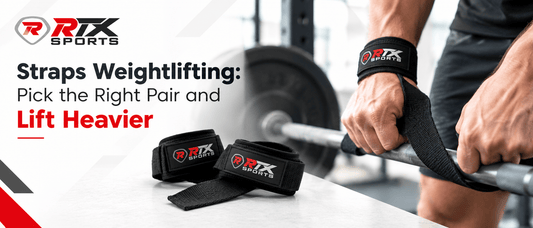
To use lifting straps, slide your hand through the loop, tighten it just above your wrist, and place the tail under the bar. Wrap it one to two times around the bar toward your thumb, then close your fist. The strap now holds the bar, so your back, traps and legs can keep working when your grip fails first.
Lifting straps help you lift heavier and finish more reps on deadlifts, rows, shrugs, pull-ups and lat pulldowns. They also protect your hands from grip fatigue and skin damage. Use them on heavy working sets only, so your grip keeps improving.This guide shows how to put on lifting straps, when to use them, how to choose between figure 8 cotton, leather and padded straps, and how they compare with wrist wraps and lifting hooks.
What Are Lifting Straps?
Lifting straps (also called weightlifting straps, weight lifting or Zughilfen) are strips of cotton, nylon or leather that wrap around your wrist and the bar. They connect your hands to the weight, so the strap carries part of the load instead of your fingers alone.
Lifters use lifting straps in the gym for pulling exercises where the weight hangs from the hands: deadlifts, rows, pull-ups, shrugs and lat pulldowns. Your back, traps and hamstrings are usually stronger than your grip. Straps remove that grip limit, so the target muscles can finish the set and you can lift heavier.Straps are not cheating. They are training equipment, like a belt or knee sleeves. Use them on heavy sets and train your grip without them on lighter work.
Do Lifting Straps Work? Do They Improve Grip?
Yes, lifting straps work. They let you hold more weight for more reps, because the strap carries part of the load instead of your fingers. This is why most lifters use them on heavy deadlifts, rows and shrugs.
Do lifting straps improve grip? Not directly. Straps take stress off your grip, so they do not make your forearms stronger. They help you train your back harder when grip is the weak link.
The smart approach is to use both:
-
Train grip without straps on warm-up sets and lighter work
-
Use straps on heavy working sets
-
Add farmer's walks, dead hangs and heavy holds to build grip strength
This way you build a stronger grip and still load your back fully.
Are Lifting Straps Worth It?
For most people who train seriously, yes. A good pair costs little compared with other gym gear, and it lasts for years. If your back day ends because your hands fail, straps are one of the cheapest upgrades you can make.
They are worth it if you:
-
Do heavy deadlifts, rows or shrugs
-
Train high-rep back workouts
-
Have a weak grip compared with your back strength
-
Want to protect your hands and skin from calluses and tears
-
Train for bodybuilding and want more volume on pulling exercises
They are less useful if you only do light weights or if your goal is a competition that bans straps.
When to Use weight lifting straps
Use lifting straps when grip is the limiting factor, not the target muscle. Good moments are:
-
Heavy working sets of deadlifts after your warm-up
-
Romanian deadlifts and rows with high reps
-
Shrugs with heavy dumbbells or a barbell
-
Lat pulldown and pull-up volume work
-
The last sets of a long back workout, when your forearms are tired
A good rule is to start without straps. When your grip begins to fail before your back or legs, put the straps on.
When Not to Use weight lifting straps
Knowing when not to use lifting straps matters just as much. Skip them when:
-
You are warming up with light weights
-
You want to train your grip on purpose
-
You compete in a sport or federation that does not allow them
-
You are a complete beginner and the weight is still light
-
You use them on every single set, including easy ones
If you use straps for everything, your grip may lag behind your back strength. Balance is the key. Keep a part of your training strap-free.
How to Put On Lifting Straps (Step by Step)
Many people fail with straps because they set them up the wrong way. Here is the classic method for standard lifting straps with a loop.
-
Pass your hand through the loop. The strap tail should come out on the thumb side of your hand, then lay the loop on your wrist.
-
Tighten the loop. Pull the loose end so the loop sits snug on your wrist, just above the wrist bone.
-
Place the strap under the bar. Put your hand over the bar and let the strap tail hang below it.
-
Wrap it around the bar. Roll the strap around the bar, moving toward your thumb, so the tail wraps over itself and under the bar.
-
Add more wraps. Make 1 to 2 full turns around the bar so the strap grips itself.
-
Close your hand. Squeeze the bar together with the wrapped strap. The tail should sit inside your fist.
-
Check for tension. Lift the bar slightly. The strap should pull tight against your wrist. If it feels loose, rewrap.
Do the same on the other hand. Make sure both straps wrap in the same direction, with the tails pointing the right way, or one side will unwind during the lift.
A common question is how tight the loop should be. It should be snug but not cut off your blood flow. If your fingers go numb or turn white, loosen it. If the strap spins on your wrist, tighten it.
How to Use Lifting Straps for Deadlifts
The deadlift is the number one exercise for straps. The bar is heavy, it hangs from your hands, and grip often fails first. Here is how to use lifting straps for deadlifts.
-
Set up your stance as usual, with the bar over mid-foot.
-
Put on the straps before you grab the bar, with the loops snug on your wrists.
-
Take a double overhand grip Because the strap holds the bar, you no longer need a mixed grip.
-
Wrap the strap around the bar, then close your hand.
-
Brace your core, pull the slack out of the bar and drive through the floor.
-
At lockout, stand tall and lower the bar with control. Do not drop it.
Using a double overhand grip with straps has a real benefit. A mixed grip puts uneven stress on your arms and shoulders, and some lifters feel it in the biceps of the underhand arm. With straps, both arms work the same way.
If you use lifting straps for deadlifts regularly, pay attention to the bar. A knurled bar with a good surface helps the strap bite, and a smooth bar can let it slip.
How to Use Lifting Straps on Lat Pulldown
The lat pulldown is one of the exercises where many people do not think about straps. But if your forearms burn before your lats do, they make a difference.
-
Set the seat and thigh pad so your legs are secure.
-
Wrap the straps around the bar, just outside your shoulder width.
-
Use a light grip. You do not need to crush the bar.
-
Pull your elbows down and back, and focus on your lats, not your hands.
-
Control the weight back up and feel the stretch.
When the straps hold the bar, you can concentrate on pulling with your back. Many lifters report a much better mind-muscle connection this way. If the bar is wide or thick, make sure the strap wraps fully around it.
Lifting Straps for Pull-Ups
Pull-ups are harder with straps than with a barbell, because the bar is fixed and your whole body hangs from it. You can use straps for pull-ups if you do high-rep sets, weighted pull-ups or lots of volume.
Wrap the strap around the bar as you would on a barbell, then hang. Pull up until your chin passes the bar. For safety, make sure the strap is firmly wrapped before you take your feet off the ground. Do not try to jump into the position with loose straps. For beginners, it is better to train pull-ups without straps first and build base grip strength.
Lifting Straps for Rows
Rows are a great match for straps. Whether you use a barbell, a dumbbell or a cable, the weight pulls on your hands. Lifting straps for rows keeps your hands attached to the weight, so you can focus on pulling your elbows back and squeezing your upper back.
For bent-over rows, use the same setup as a deadlift. For one-arm dumbbell rows, wrap the strap around the handle. This is a good way to go heavier on back day without your fingers opening.
Lifting Straps for Shrugs
Shrugs are one of the exercises where straps shine the most. You use heavy weights, but the range of motion is short. Your traps can handle far more than your grip can. With straps, you can go as heavy as your traps allow. Keep your arms straight, lift your shoulders straight up and hold the top for a second.
Lifting Straps for Powerlifting and Bodybuilding
The use of straps depends on your sport.For powerlifting, straps are usually not allowed in competition, so most powerlifters train without them for the main lifts. Many still use them in accessory work, like rows, rack pulls and Romanian deadlifts. This protects their grip for the competition lift.
For bodybuilding, straps are very common. The goal is to maximise muscle growth, and straps help you finish high-volume sets for the back and traps. Since there are no grip tests on stage, using lifting straps for bodybuilding is a practical choice.
Figure 8 Lifting Straps: What Are They and How to Use Them?
Figure 8 lifting straps are a special type of strap. Instead of a single loop and a long tail, they form a figure-eight shape. You put your hand through one loop, and the bar goes through the other. The two loops are connected by a short piece of material.
Many lifters like them because they are fast and secure.
Advantages of figure 8 weightlifting straps:
-
They are very secure, so the bar cannot slip out
-
They are popular for very heavy deadlifts and rack pulls
-
They are quick to set up once you know the technique
-
They distribute pressure evenly across your wrist
How to use figure 8 lifting straps:
-
Make the figure-eight shape with the strap.
-
Put your hand through the first loop and pull it to your wrist.
-
Place the bar through the second loop.
-
Rotate your hand so the strap twists around the bar.
-
Take your grip and lift.
Note that figure 8 straps hold the bar firmly, which also means it is harder to let go in an emergency. For this reason, be careful with them on exercises where you might need to drop the bar quickly. Practice with lighter weights first. Some lifters feel that they limit the movement of the wrist, so test them in your own training before heavy sets.
Types of Lifting Straps and Materials
Not all lifting straps are the same. The right type depends on how and what you train.
Cotton vs Leather Lifting Straps
Cotton straps are soft, flexible and quick to wrap. They are the most common choice and work well for most lifters. They can wear out faster with very heavy use.
Leather lifting straps are stiff at first but very durable. They hold the bar well and can last for years. The break-in period is longer, and they can feel less comfortable at the start.
If you want something simple and comfortable, choose cotton. If you want long-term durability for heavy use, leather is a good choice.
Padded Lifting Straps
Padded lifting straps have a layer of neoprene or foam on the wrist. This reduces pressure and protects your skin, which helps on high-rep sets or very heavy pulls. If you often get red marks or discomfort, padded straps are a good choice. Lifting straps with wrist support add an extra cushion around the joint and can feel more stable.
Heavy Duty Lifting Straps
Heavy duty lifting straps use thicker material and strong stitching. They suit very heavy deadlifts, strongman training and powerlifting accessory work. If you lift heavy several times a week, this is the type to look for.
Adjustable Lifting Straps
Adjustable lifting straps let you set the size of the wrist loop. This is useful if you have small or large wrists, or if you share the straps with a training partner. For women and lifters with thinner wrists, adjustable straps often give a better fit.
Lifting Straps vs Wrist Wraps
People often mix up lifting straps and wrist wraps, but they do different jobs.
Lifting straps connect your hand to the bar and take pressure off your grip. They are used for pulling exercises.Wrist wraps support the joint itself. They keep your wrist stable during pressing movements such as the bench press and overhead press.So the real question is not which is better, but which problem you want to solve. If your wrist bends back under load on presses, choose wrist wraps. If your grip fails on pulls, choose straps. Many lifters own both.
Lifting Straps vs Lifting Hooks
Lifting hooks are metal or plastic hooks that sit on your wrist and attach directly to the bar, holding it without any wrapping. Unlike traditional Gym Wrist Straps, lifting hooks are quicker to use and require no wrapping technique.The main difference comes down to comfort, speed and control. Hooks are fast to use, but they can feel less comfortable and may not be allowed in some gyms. Gym Wrist Straps are generally cheaper, lighter, easier to carry and offer more control over how the bar sits in your hand. Hooks tend to work best for very heavy deadlifts, while wrist straps are more versatile and suitable for exercises such as deadlifts, rows and pull-ups.
Best Lifting Straps for Deadlifts and Heavy Weights
When you look for the best lifting straps for deadlifts or for heavy weights, check these points:
-
Material strength Look for thick cotton, nylon or leather that does not stretch.
-
Stitching Strong, double stitching on the loop prevents tearing.
-
Length A long strap gives you enough tail to wrap around the bar several times.
-
Width Wider straps spread pressure better and feel more comfortable.
-
Wrist comfort Padding helps if you lift heavy often.
-
Grip A textured or rubberised surface keeps the strap from sliding.
For the heaviest pulls, many lifters choose heavy duty or figure 8 weightlifting straps. For general training, a good cotton or padded strap is enough.
Lifting Straps for Men and Women
There is no real difference between lifting straps for men and for women, except fit. Women and lifters with smaller wrists often prefer adjustable or slimmer straps so the loop sits tight. Men with larger wrists may prefer longer loops or wider padding. Always check the loop size and adjust it so it feels secure.
Lifting Straps for Beginners
If you are new to lifting, begin without straps. Learn the movement, build base strength and give your grip time to develop. Add straps when:
-
Your weights are heavy enough that grip limits your sets
-
You have good form on your pulling exercises
-
You want to add back volume without tiring your hands
Beginners should start with simple cotton straps. Practise wrapping them with light weights first. Once the technique feels natural, move on to heavier loads.
Common Mistakes When Using Lifting Straps
Even a good pair of straps will not help if you use them wrong. Avoid these mistakes:
-
Wrapping the strap in the wrong direction, which makes it unwind
-
Leaving the loop too loose on your wrist
-
Wrapping too few times, so the bar can slip
-
Using straps on every exercise and never training your grip
-
Putting straps on the wrong exercises, like presses
-
Ignoring worn or frayed straps
-
Trying a new strap type with your maximum weight
If a strap shows signs of wear, replace it. A torn strap during a heavy set is a safety risk.
How to Care for Your Lifting Straps
Good straps can last for years if you care for them. Let them dry after each workout, because sweat can weaken the fibres. Wash cotton straps by hand with mild soap and air dry them. For leather lifting straps, use a leather conditioner from time to time. Keep them in your gym bag so they do not get tangled or dirty.
Buy Lifting Straps Online in Germany
If you want to buy lifting straps online in Germany, look for a shop that offers clear product details, fast delivery within Germany and a fair return policy. Check the material, the length and the loop size. Also decide whether you need one pair or a set, since lifting straps are usually sold as 1 pair, which means two straps, one for each hand.
At RTX Sports you can find equipment for strength and combat training, designed for lifters who want to train harder and safer. Choose the type that matches your training: cotton or leather, padded or standard, standard loop or figure 8.
Quick Checklist Before You Buy
-
Do you mostly deadlift, row or shrug? Choose a strong, wide strap
-
Do you lift very heavy? Look at heavy duty or figure 8 lifting straps
-
Do you have sensitive wrists? Try padded straps with wrist support
-
Do you have thin wrists? Choose adjustable lifting straps
-
Are you a beginner? Start with simple cotton straps
Conclusion
Lifting straps are a simple tool with a big effect. They let you hold heavier weights, finish more reps and train your back, traps and legs without grip getting in the way. Learn how to put on lifting straps correctly, use them on the right exercises and keep training your grip on other sets.
Schlagwörter:
Verwandte Beiträge
How to Choose the Best Judo Dummy for Kids?
Nov 21 2026