
Grappling Dummy vs Heavy Bag: Which One Is Better for Your Training?
Ever wondered whether you should be throwing punches at a heavy bag or practicing takedowns on a grappling dummy?
If you’re building a home gym or trying to improve your combat sports training, choosing between a grappling dummy and a heavy bag can be surprisingly difficult. Both can help you develop strength, technique, coordination, and endurance, but they’re designed for very different types of training. A heavy bag is ideal for sharpening strikes, combinations, footwork, and power, while a grappling dummy gives you a target for practicing takedowns, submissions, holds, and ground techniques.
So, which one is better for you? The answer depends on your goals, training style, and the skills you want to develop. In this guide, you’ll discover the key differences between a grappling dummy and a heavy bag, along with the benefits of each, so you can choose the right training partner for your workout.
What Is a Grappling Dummy?
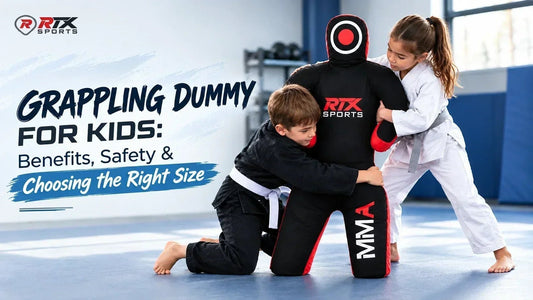
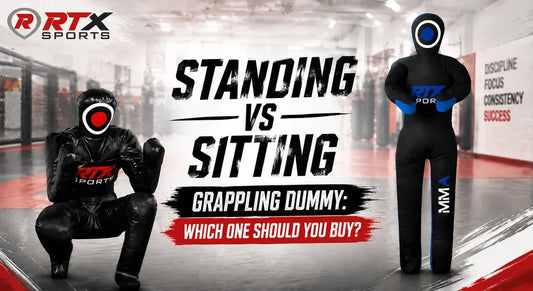
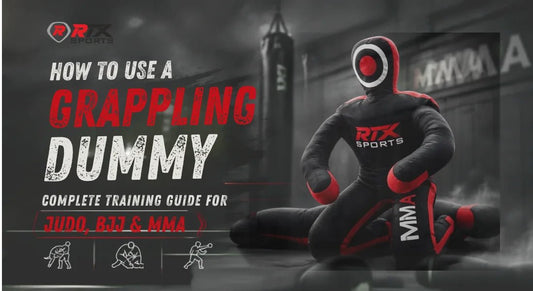
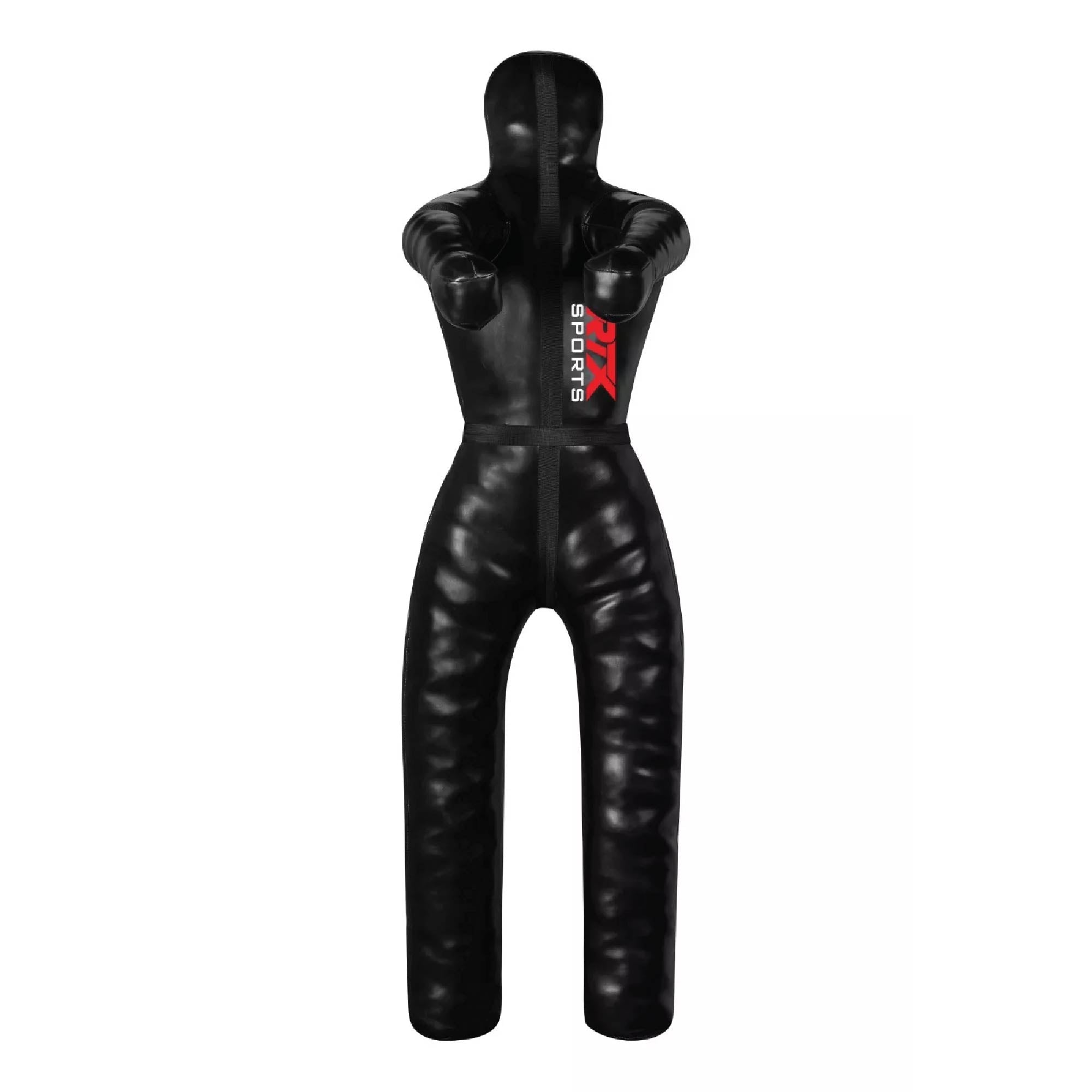
A grappling dummy is a training tool designed to simulate the shape and positioning of a human training partner. Unlike a traditional punching bag, it has arms, legs, and a body for practicing wrestling, BJJ, MMA, and other grappling sports. RTX grappling training dummy can be used for takedowns, positional drills, transitions, holds, and submissions. You can place it on the floor or move it into different positions for versatile ground-based practice. A BJJ training dummy is useful when a live training partner is not available. Regular solo grappling training can help you build confidence with movement patterns and technical sequences.
-
Practice takedowns and positional drills without needing another person.
-
Work through guard positions, mount transitions, and side control movements at your own pace.
-
Repeat transitions, holds, and submission setups as often as you like.
-
Move the dummy into different positions for more flexible ground-based practice.
-
Use solo grappling training to build confidence with techniques before live practice.
What Is a Heavy Bag?
A heavy bag is primarily designed for striking practice. It provides a stable but movable target that allows athletes to throw punches, kicks, knees, combinations, and other striking techniques repeatedly. A heavy punching bag is commonly used in boxing, kickboxing, Muay Thai, MMA, and general fitness training. Depending on its size and construction, it can handle powerful strikes while giving you useful feedback through its movement.
A boxing heavy bag is especially useful when your goal is to improve punching technique, combinations, timing, and power. It can also become part of conditioning workouts where you alternate between high-intensity combinations and short recovery periods. For combat athletes, a punching bag for training can provide an easy way to add striking work to a home or gym routine. You can train alone while focusing on technique, speed, movement, and endurance.
Grappling Dummy vs Heavy Bag: The Main Difference
The biggest difference is simple: a grappling dummy is built around grappling, while a heavy bag is built around striking. A grappling dummy gives you a human-shaped target that can be used on the floor. A heavy bag is normally suspended or mounted and is designed to absorb repeated strikes. Their different shapes and construction make each one better suited to specific skills.
|
Training Goal |
Grappling Dummy |
Heavy Bag |
|
Takedowns |
Excellent |
Limited |
|
Submissions |
Excellent |
Not suitable |
|
Ground positions |
Excellent |
Limited |
|
Wrestling drills |
Excellent |
Limited |
|
Punching |
Limited |
Excellent |
|
Kicking |
Limited |
Excellent |
|
Striking combinations |
Limited |
Excellent |
|
Footwork |
Some use |
Excellent |
|
Ground transitions |
Excellent |
Not suitable |
|
Power development |
Moderate |
Excellent |
|
Solo practice |
Excellent |
Excellent |
The right choice therefore depends less on which product is “better” and more on what you actually want to practice. If most of your training involves grappling, a dummy will give you more useful repetitions. If striking is your priority, a heavy bag is the more practical choice.
When a Grappling Dummy Is the Better Choice
A grappling dummy is the stronger option when your main focus is wrestling, BJJ, MMA grappling, or ground fighting. Its body shape lets you practice techniques that simply cannot be performed correctly on a traditional punching bag. For example, a wrestling training dummy can help you repeat takedown entries and positional movements without relying on a partner.
You can also use it to drill transitions repeatedly, which is useful when you want to improve your movement without stopping between repetitions. A BJJ practice dummy can also be useful for athletes who want additional technical work outside regular classes. It gives you the freedom to slow down a technique, check your positioning, and repeat the same movement until it feels more natural. A grappling dummy is ideal for practicing:
1. Takedowns
Practice entries, finishes, and controlled takedown movements without needing a live partner.
2. Ground positions
Work on positions such as mount, side control, guard, and other common ground situations.
3. Submissions
Repeat submission mechanics and transitions while focusing on hand placement and body positioning.
4. Wrestling movements
Drill movements such as takedown setups, control positions, and transitions at your own pace.
5. Solo technique repetition
Build repetition by practicing the same sequence several times without waiting for a training partner.
For athletes who regularly train on the ground, this type of grappling practice equipment can make solo sessions much more productive.
When a Heavy Bag Is the Better Choice
A heavy bag becomes the better option when striking is the main part of your training. It allows you to throw repeated punches, kicks, knees, and combinations while working on speed, accuracy, power, and conditioning. A boxing training bag is especially useful for athletes who want to develop combinations. You can work on individual punches first and then connect them into longer combinations while moving around the bag.
An MMA heavy bag can also be useful for mixed combat sports training because it provides a large target for different striking techniques. While it cannot replace a live opponent, it gives you a consistent target for repeated striking practice. A typical heavy bag workout can include short rounds of technical combinations, power shots, speed work, and conditioning. This makes the bag useful not only for combat athletes but also for people who want a demanding fitness session. A heavy bag is ideal for practicing:
-
Punching combinations
Work on combinations while focusing on accuracy, rhythm, and clean technique. -
Kicking techniques
Practice different kicks and learn how to control distance and power. -
Power development
Repeated striking allows you to focus on generating force without relying on a moving opponent. -
Footwork
Move around the bag while practicing angles, distance, and positioning. -
Conditioning
High-intensity rounds can challenge your cardiovascular fitness and muscular endurance.
For striking-focused athletes, this type of striking practice equipment can become a central part of regular training.
Grappling Dummy for BJJ, Wrestling, and MMA
One of the biggest advantages of a grappling dummy is its versatility across different grappling disciplines. The same training tool can be used for BJJ drills, wrestling movements, MMA ground work, and general martial arts practice. A dummy for BJJ practice can help you repeat positional sequences without requiring a partner. This is particularly useful when you already understand the technique and simply need more repetitions to improve your movement.
For wrestling athletes, wrestling practice equipment such as a suitable dummy can provide an additional way to work on takedown mechanics. You can focus on your entry, body positioning, and finish while controlling the pace yourself. MMA athletes can also benefit from an MMA grappling dummy because MMA requires more than striking. Ground control, takedowns, transitions, and submissions all play an important role, making a human-shaped training target useful for technical repetition.
Heavy Bag for Boxing, MMA, and Martial Arts
Heavy bags are also versatile, especially when striking is an important part of your discipline. Boxing athletes can use them for combinations, while kickboxers and MMA athletes can incorporate punches, kicks, knees, and movement into their sessions. A martial arts punching bag can provide a reliable target for repeated striking drills. Because the bag stays available whenever you need it, you can work on a specific technique without needing another person to hold pads.
A striking training bag can also help develop consistency. You can repeat the same combination many times, observe how the bag reacts, and gradually improve your control and power. For home training, a heavy-duty punching bag can be especially practical when you expect to perform frequent or high-intensity sessions. The key is choosing equipment that matches your training style and intended use.
Which One Is Better for Solo Training?
Both options work well for solo training, but they support different types of practice. A grappling dummy is better for athletes who want to rehearse grappling techniques, while a heavy bag is better for athletes who want to develop striking skills. With a grappling dummy, you can spend an entire session working through positions and transitions. A ground fighting dummy gives you a physical target for movements that require a body-shaped object rather than a hanging bag.
Choosing the Right Training Equipment for Your Goals
Before buying either option, think about the skills you spend most of your training time developing. Your preferred combat sport should be the first consideration because it determines which movements you need to repeat most often.
If you spend most of your time working on BJJ, wrestling, or ground techniques, a grappling dummy is likely to provide more value. If your sessions focus mainly on boxing, kickboxing, or striking combinations, a heavy bag will probably be the more useful choice.
Consider these questions before making your decision:
-
Do you primarily train grappling or striking?
-
Do you want to practice techniques on the ground?
-
Are takedowns and submissions important to your training?
-
Do you mainly want to improve punches, kicks, and combinations?
-
Will most of your training happen alone?
-
Do you want equipment for technique practice, conditioning, or both?
Your answers will make the choice much clearer. The best grappling training equipment is the equipment that supports the skills you actually want to improve.
Grappling Dummy or Heavy Bag for Home Training?
For a home gym, both options can be useful, but available space and training goals should guide your decision. A heavy bag generally needs suitable mounting space, while a grappling dummy needs enough floor area for ground drills and movement. A ground training dummy can be moved around when you want to practice different positions, making it useful for home sessions where you need flexibility between standing and ground-based drills. If you're wondering whether grappling dummies are worth it, consider how often you plan to practice ground techniques and whether a dummy fits your training routine and available space.
On the other hand, a martial arts training bag can provide a consistent striking target for repeated rounds. Once properly installed, it can become a regular part of boxing, kickboxing, and MMA workouts. If your home training routine includes both disciplines, owning both can give you a more complete setup. However, if you are choosing only one, prioritize the equipment that matches the techniques you practice most frequently.
Grappling Dummy vs Heavy Bag: Which Should You Buy?
There is no universal winner between a grappling dummy and a heavy bag. Each piece of equipment solves a different training problem, and your goals should determine which one deserves a place in your gym.
Choose a grappling dummy if your priority is:
-
BJJ and ground technique, especially practicing positions and movements.
-
Wrestling and takedowns, including drilling entries and transitions.
-
Submissions and positional drills without needing a training partner.
-
Ground transitions, control, escapes, and repeated movement patterns.
-
Solo grappling practice when you want to train at home.
-
Repeating technical movements until they become more natural and consistent.
Choose a heavy bag if your priority is:
-
Boxing and striking, from basic punches to more advanced combinations.
-
Punching combinations, speed, accuracy, and timing.
-
Kicking practice, including working on technique and combinations.
-
Power development by practicing strong, controlled strikes.
-
Footwork and movement, while learning to manage distance and angles.
-
High-intensity conditioning when you want a workout that challenges both your cardio and muscular endurance.
For athletes looking for grappling workout equipment, a well-designed dummy can provide valuable technical repetitions. RTX Sports grappling dummy options can be considered when building a training setup focused on BJJ, wrestling, MMA, and other grappling disciplines.
For athletes focused on striking, RTX Sports boxing equipment can support a training setup built around punching and striking practice. A suitable bag can become useful for both technical sessions and demanding conditioning workouts.
Can You Use Both?
Yes, and for many combat sports athletes, using both can create a more balanced training routine. The equipment does not have to compete with each other because each one develops a different part of your skill set. You could use the heavy bag for striking rounds and then switch to the dummy for takedown or ground work. This approach can be particularly useful for MMA athletes because the sport combines striking and grappling.
A combat sports training dummy can cover the grappling side of your practice, while a combat sports bag can support striking work. Together, they allow you to structure sessions around different skills without depending entirely on a training partner. This combination can also make home workouts more varied. Instead of repeating the same type of exercise every session, you can divide your training time between striking technique, grappling technique, and conditioning.
Conclusion
A grappling dummy and a heavy bag are both valuable training tools, but they are designed for different purposes. A grappling dummy is the better choice for BJJ, wrestling, submissions, takedowns, and ground techniques, while a heavy bag is better for punches, kicks, combinations, power, footwork, and striking conditioning. If your main goal is grappling, choose equipment that lets you practice realistic ground movements and technical repetitions. If striking is your priority, choose a bag that can handle repeated punches and kicks while supporting your training style.
For athletes who train both sides of combat sports, using both can provide the most complete solo setup. With the right RTX Sports martial arts gear and a training routine built around your goals, you can make solo sessions more focused, productive, and consistent. Ultimately, the better choice is not the product with more features. It is the one that gives you more opportunities to practice the skills you actually want to improve.
FAQs
Is a punching bag or dummy better?
Both are useful, depending on your training goals. A heavy bag is great for punches, kicks, combinations, and cardio, while a dummy provides a more realistic human-shaped target. For general training, a heavy bag is usually the more versatile option.
Is heavy bag training good?
Yes, heavy bag training is an excellent workout. It can improve your strength, speed, coordination, endurance, and punching technique while providing a great cardio workout.
How heavy was Bruce Lee's punching bag?
There is no reliable record of one specific weight for Bruce Lee's punching bag. He used different training equipment throughout his career, so there isn't a confirmed standard weight associated with his bag.
Can you build muscle with a heavy bag?
Yes, heavy bag training can help strengthen and develop muscles in your shoulders, arms, chest, back, core, and legs. However, for significant muscle growth, it is best combined with regular strength training and proper nutrition.
Is it necessary to wear gloves with the rubber dummy?
Wearing gloves is recommended when training with a rubber dummy, especially when throwing powerful or repeated strikes. Gloves help protect your hands and wrists and make training more comfortable.
Can I use a freestanding bag if I can't hang one?
Yes. A freestanding bag is a great option if you don't have a suitable place to hang a traditional heavy bag. It is easy to set up, doesn't require ceiling or wall mounting, and can be moved when needed.
Schlagwörter: